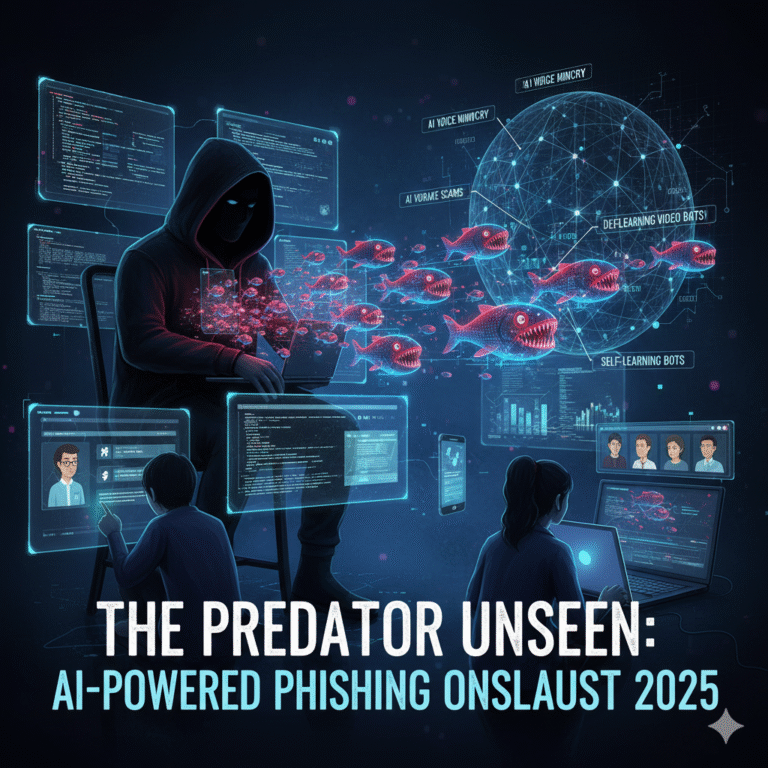
Cybersecurity teams are facing a new kind of threat in 2025: phishing attacks powered by artificial intelligence. Unlike traditional scams that relied on poorly written emails and generic templates, today’s phishing campaigns are intelligent, personalized, and alarmingly convincing.
Attackers are now using AI to craft messages that closely mimic real human communication, making it harder than ever to tell what’s legitimate and what’s malicious.
A Smarter, More Convincing Attack
AI-powered phishing works by analyzing large amounts of publicly available data—social media profiles, company websites, breached databases, and even previous email conversations. With this information, attackers generate emails that sound natural and context-aware.
Messages often reference real projects, recent purchases, or internal company language. As a result, even experienced professionals are being caught off guard.
Why These Attacks Are So Effective
The success of AI-driven phishing lies in scale and precision. Attackers can send thousands of highly customized messages in minutes, adjusting tone and wording based on how recipients respond.
Voice-based phishing, or vishing, has also grown rapidly. AI voice cloning allows criminals to impersonate executives or colleagues, adding urgency and authority to their requests.
The Growing Risk for Organizations
Businesses remain the primary targets. A single compromised inbox can provide attackers access to internal tools, cloud platforms, and customer data. Many recent ransomware and data theft incidents begin with a phishing email that bypassed traditional filters.
Remote work and cloud-first environments have only increased the attack surface, giving phishing campaigns more opportunities to succeed.
AI on the Defensive Side
Defenders are also turning to artificial intelligence. Modern email security platforms now use machine learning to detect unusual language patterns, suspicious behavior, and abnormal login activity.
Instead of relying solely on known threat signatures, these systems learn how users normally communicate and flag deviations before damage occurs.
What This Means Going Forward
AI-powered phishing signals a shift in the cybersecurity landscape. Attacks are no longer easy to spot, and relying on basic awareness training is no longer enough.
Organizations must combine intelligent security tools with ongoing education and strong authentication practices to reduce risk.
Final Take
Phishing has evolved from a low-effort scam into a sophisticated cyberweapon powered by AI. As attackers continue to refine their techniques, cybersecurity strategies must evolve just as quickly.
In 2025, the ability to recognize and respond to AI-driven threats may determine which organizations stay secure—and which become the next headline.